Transcranial Magnetic Stimulation (TMS)
A non-invasive treatment for depression and obsessive-compulsive disorder. You stay awake throughout, with no general anaesthesia or sedation, and you can usually return to your day straight afterwards.
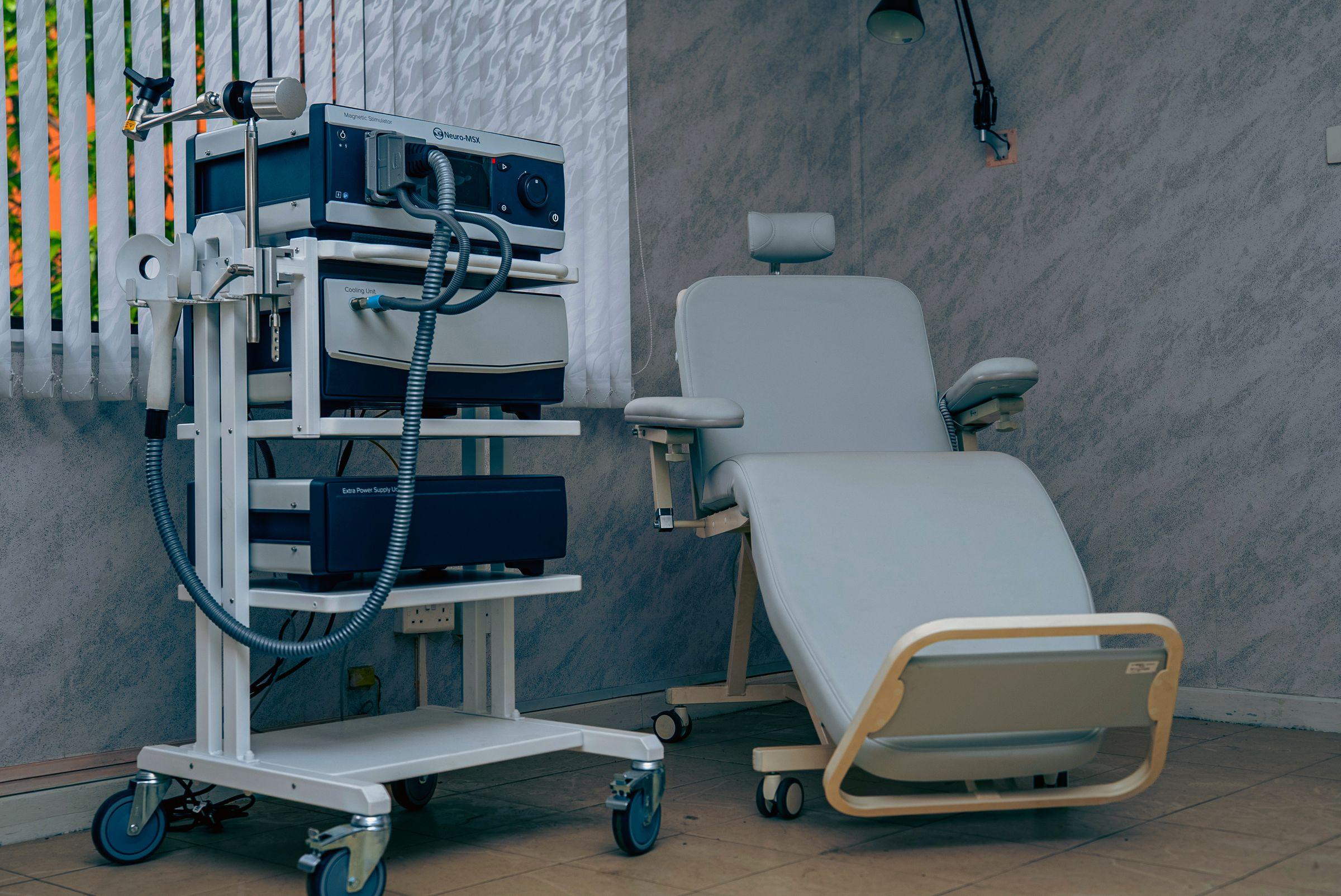
What is TMS?
Transcranial magnetic stimulation (TMS) is a non-invasive brain stimulation treatment. It uses magnetic fields to activate specific areas of the brain associated with mood regulation.
One Mind has played a pioneering role in advancing TMS services in Eastern and Central Africa.
How it works
You sit in a reclining treatment chair while a magnetic coil is placed gently against your head. The coil delivers brief magnetic pulses to the targeted area of the brain. You remain awake and alert throughout each session.
TMS does not require general anaesthesia, sedation or a hospital stay, so sessions fit around work and daily routines. A course of TMS is usually given over several weeks; your psychiatrist will explain the schedule recommended for you.
What TMS is used for
TMS is used in the treatment of major depressive disorder, particularly when other treatments have not helped enough, and obsessive-compulsive disorder (OCD).
It may be considered for other conditions only after careful clinical assessment, and only where the evidence supports it for you.
Is TMS right for me?
Every patient has a psychiatric assessment before starting TMS. We review your diagnosis, past treatments, current medication and general health.
TMS may not be suitable if you have metal implants in or near the head, certain implanted medical devices or a history of seizures. Your assessment checks for these.
TMS is generally well tolerated. Some people notice scalp discomfort or a headache during or after sessions, which usually eases. Your psychiatrist will discuss possible risks with you before treatment.
Need urgent help? If you are in crisis or at risk of harming yourself, call emergency services on 999 or 112, or go to the nearest emergency department.
The treatment process
Psychiatric assessment
We confirm your diagnosis and check that TMS is a safe and suitable option for you.
Treatment planning
We set the treatment target and the right stimulation level for you, and agree a schedule.
Treatment sessions
You attend sessions at the clinic over the course of treatment, awake and seated throughout.
Review and follow-up
We monitor your progress during the course and review your care once it is complete.
Common questions
What is TMS?
Transcranial magnetic stimulation is a non-invasive treatment that uses magnetic fields to activate areas of the brain associated with mood regulation. It is used in the treatment of major depressive disorder and obsessive-compulsive disorder (OCD).
Do I need anaesthesia or sedation for TMS?
No. You stay awake and seated throughout each session, with no general anaesthesia or sedation, and most people return to their usual activities straight afterwards.
Is TMS safe?
TMS is generally well tolerated. Some people notice scalp discomfort or a headache during or after sessions, which usually eases. Your psychiatrist will discuss possible risks with you before treatment.
Who is suitable for TMS?
Everyone has a psychiatric assessment first. TMS may not be suitable if you have metal implants in or near the head, certain implanted medical devices or a history of seizures.
How many sessions will I need?
A course of TMS is usually given over several weeks. Your psychiatrist will recommend a schedule based on your assessment.
Other services
- Psychiatric Evaluation and DiagnosisA thorough assessment, an accurate diagnosis and a treatment plan built around you, with ongoing care and follow-up for children, adolescents and adults.
- Corporate PsychiatryWe help organisations find mental health and wellbeing gaps, then support employees and leaders with specialist psychiatric care.
- Virtual and international careVirtual consultations for eligible patients in Kenya and abroad.
Explore TMS treatment at One Mind
If you are living with depression or OCD and want to know whether TMS could help, start with a conversation with our psychiatric team.